NATO Strap Guide: Everything You Need to Know
Whether you’re a seasoned collector or just getting into watches, the NATO strap is one of the most practical, versatile, and stylish watch accessories you can own. In this complete guide, we cover everything — from its military origins to how to choose the right one for your wrist and watch.
What Is a NATO Strap?
A NATO strap is a watch band made from a single continuous piece of nylon (or sometimes leather or ballistic nylon). It threads underneath the watch case through both spring bars, providing extra security — if one spring bar fails, the watch won’t fall off your wrist.
This design was originally developed for the British Ministry of Defence in 1973, hence the name “NATO” (the specification was listed in the NATO Stock Number system). It became iconic through its association with military field watches and, later, James Bond’s Rolex Submariner in the 1970s.
A Brief History of the NATO Strap
The NATO strap was standardized in 1973 under British military specification G10 — which is why it’s sometimes called a “G10 strap.” Soldiers needed a secure, washable, and easily replaceable strap for field use. The nylon construction proved to be durable, quick-drying, and inexpensive — perfect for military service.
Its civilian popularity exploded in the 2010s with the rise of the watch enthusiast community online. Today, brands like Seiko, Orient, and even Rolex are frequently paired with NATO straps by collectors seeking a casual, sporty look. Read our full Seiko brand guide to see which models pair best with a NATO.
Types of NATO Straps
- Standard NATO (G10): Single-piece nylon with a metal keeper ring. The most common type.
- Zulu Strap: Similar to the NATO but with thicker, rounded hardware and a simpler construction.
- Leather NATO: Offers a more refined, dressy look while retaining the two-piece pass-through security.
- Perlon Strap: Made from a woven nylon mesh, lighter and more breathable.
- Sailcloth / Cordura: Textured synthetic materials with a premium feel.
How to Choose the Right Width
NATO strap width must match your watch’s lug width — the distance in millimeters between the lugs where the strap attaches. Common sizes include:
- 18mm — Smaller dress watches and vintage pieces
- 20mm — The most popular size; fits most 40–42mm watches
- 22mm — Larger sport and dive watches (e.g., 44mm+)
- 24mm — Oversized watches and pilot watches
When in doubt, check your watch’s manual or measure the lug gap with a caliper. A strap that’s too wide will be forced in and may damage the lugs; one too narrow will look sloppy and may not stay centered. For dive watches, also check our Best Dive Watches Under $500 guide to see which models accept 20mm and 22mm NATOs.
How to Install a NATO Strap
Installing a NATO strap is straightforward but takes a little patience the first time:
- Remove your old strap and leave both spring bars in place.
- Slide the long end of the NATO strap through the bottom spring bar gap (between the case back and the bar).
- Bring it back up through the top spring bar gap from the other side.
- Thread the remaining fabric through the keeper rings to secure it.
- Adjust the buckle position for your wrist size.
The key distinguishing feature: the NATO strap runs under the entire case, not just over the lugs. This is what gives it its famous security advantage over standard two-piece straps.
Best Color Combinations
One of the joys of NATO straps is how easy and affordable it is to change up the look of your watch. Here are some tried-and-true combinations:
- Grey / Black: Goes with everything. Especially great on stainless steel sports watches.
- Navy Blue: A classic pairing with white-dialed dress watches or vintage Seikos.
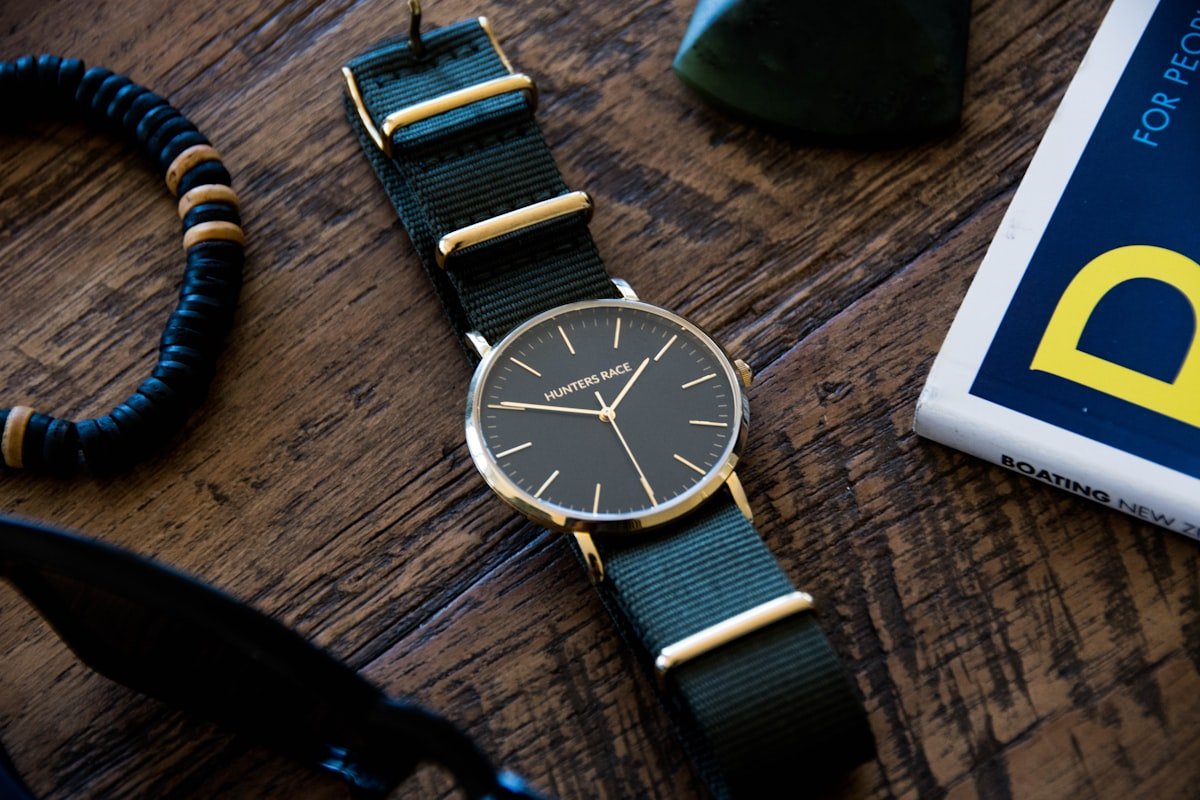
- Olive / Green: Perfect for military-inspired field watches like the Hamilton Khaki.
- Bond NATO (Grey with Black and Red stripes): The iconic Roger Moore-era combination.
- Racing Stripe patterns: Fun and sporty; great for chronographs.
Care and Maintenance
One of the biggest advantages of NATO straps is how easy they are to clean. Nylon straps can be hand-washed with mild soap and water, rinsed thoroughly, and air-dried flat. For leather NATOs, use a leather conditioner periodically and avoid prolonged water exposure.
A well-maintained NATO strap can last years. When the nylon starts to fray at the edges or the hardware shows significant corrosion, it’s time to replace it — and at $5–$30 for most quality straps, replacement is easy and affordable.
Where to Buy Quality NATO Straps
- Nylon quality: Look for ballistic or mil-spec nylon, not thin polypropylene imitations.
- Hardware: Stainless steel buckles and keepers are more durable than zinc alloy.
- Stitching: Double stitching along the edges indicates a well-made strap.
- Reputable brands: Hirsch, Rios1931, Crown & Buckle, and Barton Watch Bands are all well-regarded in the community.
Conclusion
The NATO strap is a testament to the idea that the best watch accessories are often the simplest. Born from military necessity, refined by enthusiast culture, and celebrated for its versatility — it deserves a place in every watch lover’s drawer.
Whether you’re dressing up a dress watch for a casual Friday or giving new life to a vintage beater, a NATO strap is one of the most rewarding $20 upgrades you can make. Experiment with colors, materials, and widths — and most importantly, have fun with it.
Keep Exploring
- Watch Straps Complete Guide — every strap type compared side by side
- Best Dive Watches Under $500 — the top watches to pair with a NATO
- Best Military Watches for Men — field watches that were born for NATO straps
- Seiko Brand Guide — the most NATO-friendly watch brand in the world